

Multimedia Integration & UX Design
INSTRUCTIONAL WEB EXPERIENCE
As part of my graduate training in Instructional Design, I designed and developed a five-page dynamic website tailored for parents of twice-exceptional (2e) homeschoolers — children who are both gifted and have learning differences. The site provides accessible, emotionally resonant resources and guidance through curated blog content, animated visuals, original infographics, and multimedia storytelling.
This project demonstrates my ability to blend instructional sensitivity, UX design, and visual communication to create inclusive, emotionally intelligent learning spaces for a niche and underserved audience.

PROJECT DETAILS
Roles: UX/UI Designer, Instructional Designer, Multimedia Developer
Brief: Creation of a 5-page instructional web experience through emotionally intelligent design and inclusive UX.
TOOLS
Wix
Canva
Adobe: Express & Photoshop
ChatGPT
AI Image Generation
SKILLS
UX/UI Design
Instructional Messaging & Content Strategy
Accessibility & Inclusive Design
Visual Communication & Branding
Multimedia Production
Rapid Content Development
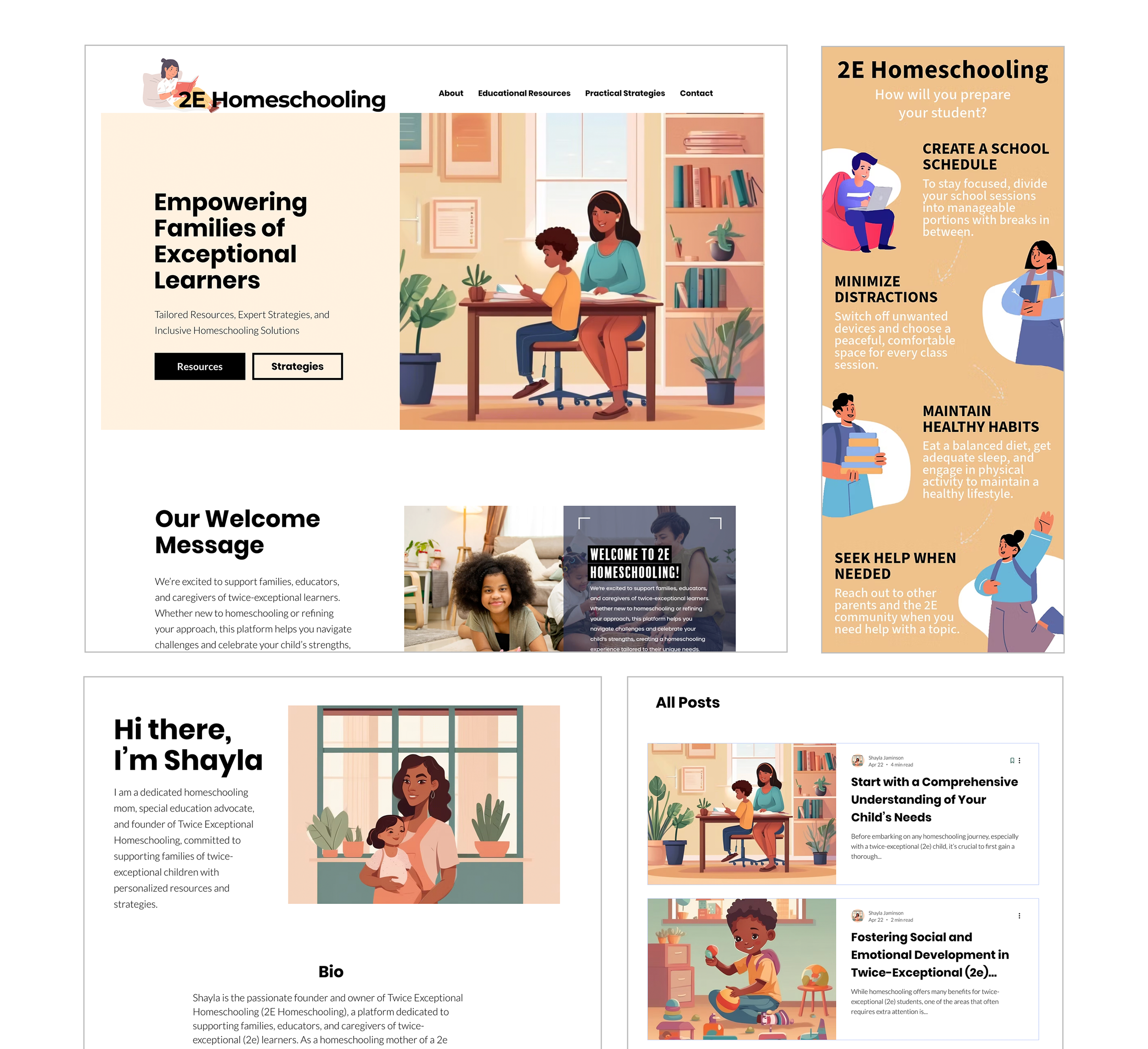
Screenshots of the website’s homepage, about page, and blog interface, along with the custom infographic developed to illustrate core instructional concepts and maintain design cohesion across the site.
Artifacts
Notes & Rationale
-
Developed a five-page interactive website designed to deliver accessible, emotionally resonant learning content for parents of twice-exceptional (2e) homeschoolers.
The project goal was to create a digital environment that blended information, guidance, and multimedia storytelling within a single cohesive experience.
Key deliverables included a complete website build, logo, animated visuals, instructional infographics, AI-curated imagery, and a short introductory video — all developed under tight time and budget constraints.
-
The design phase applied user experience (UX) principles to ensure the site was intuitive, emotionally resonant, and accessible to neurodivergent users.
I began with a content hierarchy and wireframe layout to establish clear information flow and visual balance across pages. Each section was designed around user goals: quick access to guidance, minimal cognitive friction, and emotionally validating messaging.
The site’s visual language (color palette, typography, and iconography) was intentionally selected to evoke calm focus and support readability for neurodiverse audiences.
Instructionally, the site used short-form microcontent, interactive visuals, and multimodal presentation to support self-paced exploration.
-
The website was built in Wix, using AI-assisted layout generation followed by manual refinement to ensure logical navigation and responsive design across devices.
Throughout development, I conducted informal usability walkthroughs to evaluate readability, pacing, and interaction flow, making iterative adjustments based on visual clarity and user accessibility.
Custom infographics were designed in Canva, while video elements were produced in Adobe Express for cohesion and representation.
Each design decision reinforced the site’s UX goals: intuitive navigation, balanced information density, and an emotionally supportive user journey.
Welcome Video
Outcomes
The completed site delivered an emotionally grounded, highly usable digital experience within a rapid production cycle. Despite tight constraints, the project achieved high visual quality, instructional clarity, and accessibility, earning positive feedback from parents and educators within the 2e community. The design serves as a model for how emotionally intelligent UX and instructional design can intersect to create inclusive, human-centered learning environments.